Bulk Cargo Logistics and Solving the Commodity Conundrum
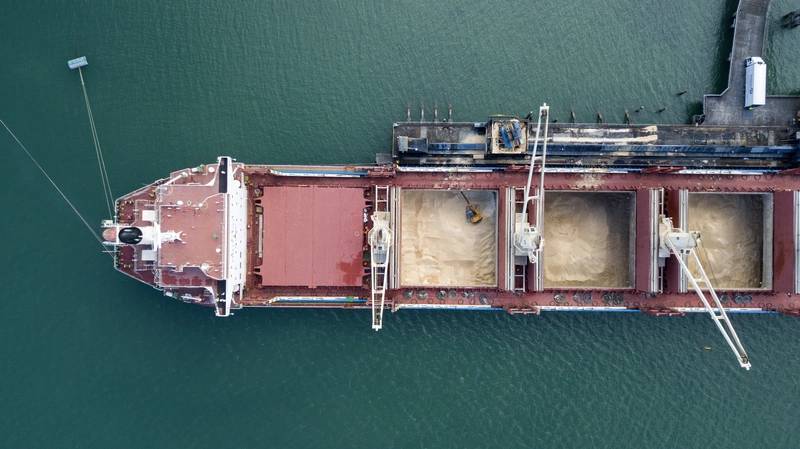
The long-established processes and practices associated with bulk commodity shipping present distinct challenges. For cargo owners, they mean a lack of transparency – leading to significant inefficiency and waste. OceanSMART Managing Director Bryan Phillips explains how new technologies that digitize these methods are poised to change the entire industry.
The movement of cargoes from source to destination involves so much more than a seller-buyer relationship: there are multiple players – and multiple complexities – at work in the bulk commodity cargo logistics arena.
Commodity traders may sell on the owner’s behalf, brokers are used to make vessel arrangements and advise on contract terms and port agents will quote on costs at both loading and discharging locations.
There are further variables, for example, the nature of the vessel agreement – sourcing an asset from the spot market, perhaps, or agreeing to a time-limited charter – as well as the potential involvement of several different shippers and receivers in an individual movement.
Underpinning these processes are inherent billing and revenue-sharing mechanisms that give rise to many of the transparency issues. The result: it’s difficult for cargo owners to fully understand costs and ascertain value, and there’s little incentive for some in the supply chain to eliminate inefficiency.
These processes have become embedded and there’s a prevailing sense that this is just the way things are. But simply maintaining the status quo generates conflicts of interest, misinformation, and financial waste, while creating delays, unnecessary risk, and negative environmental impacts.
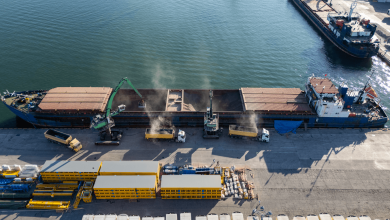
Examples of primary areas of waste in the supply chain are idle time and commissions. Primarily related to the loading and discharging of cargoes in port, these idle time and commissions are seen simply as a cost of doing business. But if optimized, these interlinked factors can help businesses save significant money.
In one analysis of idle time, conducted on behalf of a client with significant cargo volumes, we found that more than 45% of time attributable to port calls was inactive in terms of cargo discharge activities. Using our advanced algorithms, we were able to process source documents that record time in port and presented our client with a detailed breakdown of the idle time. We identified that most of the idle time was spent sitting at anchorage awaiting a berth. Other factors included weather delays and waiting for inspections, as well as tide, cargo and piloting issues. The client had no way to understand or measure this waste in real-time.
The impact of idle time is extensive, both financially and environmentally. There are additional costs associated with fuel, demurrage, port services and crew. And don’t forget the higher cost of capital. The bills run into the hundreds of millions of dollars.
Then there’s loss of revenue: if asset utilization were more effective, significant quantities of additional cargo could be sold and delivered.
Business pricing represents another – little understood – way of realizing savings. Inefficiencies relating to idle time increase the level of commissions or rebate being earned in both demurrage and port costs.
To cite one scenario: the cargo owner uses a broker to source the vessel, who is paid freight and demurrage commissions by the ship owner. The port agent – who sources the individual vendors to provide services in port – frequently adds their own undisclosed amount to these services and then receives a commission or rebate from the port vendors. Then the charterer adds an address commission, a percentage on top of the freight cost.
When assessing these issues and the consequent extent of potential waste – we need to bear in mind the sheer scale of the industry: bulk commodities account for around 60% of all seaborne commodity movements globally.
We’ve developed OceanSMART, under the Oceaneering banner, as a specialist business focused on applying technology to help customers eliminate waste and enhance efficiency by exposing key market data – in effect, digitizing the process to empower cargo owners.
Over the past two decades, technological advances have given cargo owners better visibility of data related to areas such as port costs, vessel locations, and weather. However, the continued use of manual, paper-based systems – and the practice of ringfencing data – still compromises transparency. Cargo owners, to a significant extent, remain out of the loop.
Several external factors are driving change, such as the widening adoption of anti-fraud and corruption legislation, International Maritime Organization (IMO) regulations on fuel efficiency and a growth in external investment into the maritime bulk space. That in turn is creating an environment that embraces technological advances, with many investors seeing the digital transformation of the marine sector as a major business opportunity.
Our goal has been to create transparency around waste and conflicts of interest, and then to help implement the solutions that deliver clarity and efficiencies. There is scope for parties across the bulk logistics supply chain to use our technological solutions, but they’re primarily designed to inform cargo owners and shift the control back to them.
maritime professional