Wakashio Grounding and Oil Spill: Was the Mauritian Government Unprepared?
Evidence indicates that Mauritius was very well prepared; the event did not come as a surprise. Importantly, the country dealt with similar incidents very successfully before. Yet, a public inquiry will have to address a number of questions.
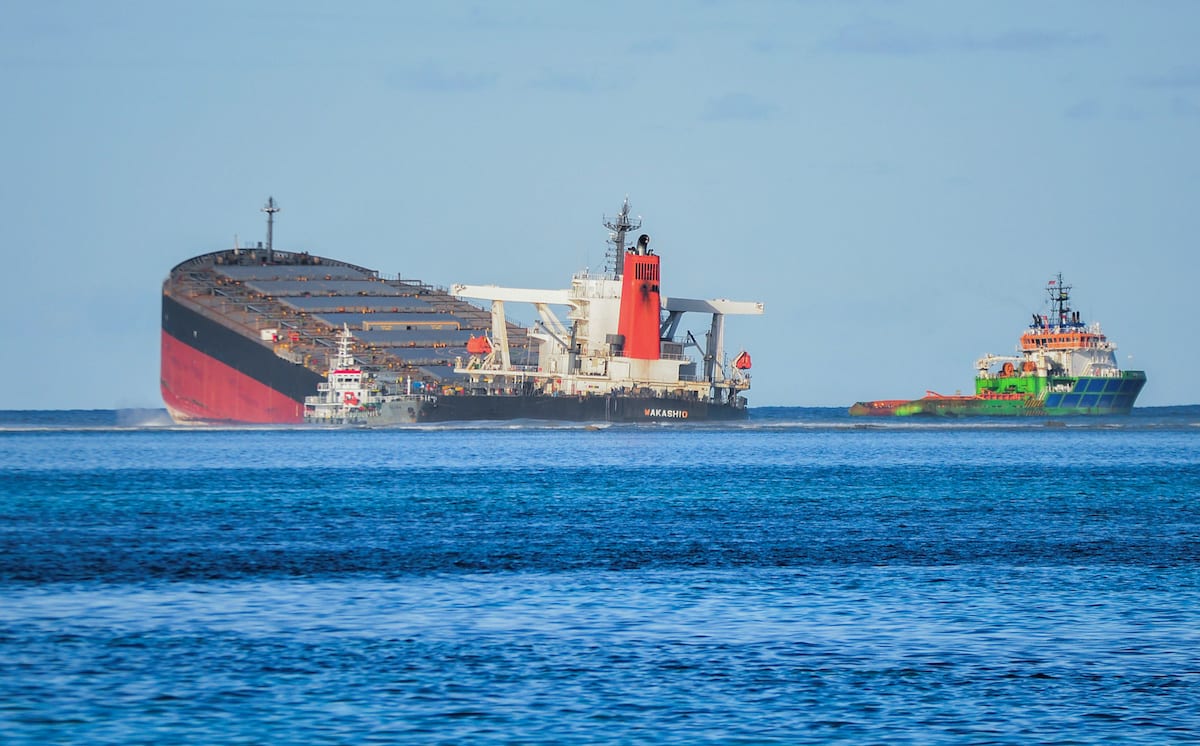
The Mauritius disaster unfolded in the evening of July 25th. The bulk carrier MV Wakashio grounded on its way from China to Brazil close to the shore of Mauritius. The causes are subject of an ongoing investigation.
First analyses indicate that weather was not the problem. Yet, the vessel deviated from the usual course that traffic in the region takes. The ship was on a collision course.
No oil spilled at the grounding. The Mauritius coast guard took preventive actions. The government activated its National Oil Spill Contingency Plan the next day.
By the 28th of July, the Dutch salvage company Smit Salvage had been contracted to work with local logistics giant CELERO to keep the MV Wakashio afloat and pump out the over 4,000 tons of oil and diesel. When the first out of four tugboats arrived three days later, the recovery operation was ready to begin.
The responsible minister of environment said that he was confident that all “necessary precautionary measures to prevent any kind of pollution at sea” had been taken.
The weather conditions were against the minister’s plans. The recovery operation was put on halt. The sea was too rough.
By August 5th observers spotted some minor oil sheen around the vessel. The “the risk of oil spill was still low”, the minister argued.
Only hours later, the MV Wakashio flooded and started sinking the next morning. Oil started to spill into the sea at a high rate. As a result, the disaster that is by now well documented unfolded. Government officials radically changed their tone.
In reaction, the prime minister not only declared a “state of environment emergency”, but also said that the nation did not have “the skills and expertise to refloat stranded ships.” The minister of fisheries, told international news media, “This is the first time that we are faced with a catastrophe of this kind and we are insufficiently equipped to handle this problem.”
The foreign minister called upon the UN, the EU, India its neighbor France, as well other countries and organizations for emergency assistance.
These public statements by governmental officials raise the questions whether authorities were unaware about the risk and unprepared.
A look into the archives reveals, that the government was anything than unprepared. The opposite seems the case. It shows that until the disaster, Mauritius was the ‘poster’ boy of regional oil spill prevention.
Mauritius was one of the first African countries to finalize in 1990 an oil spill contingency plan with support from the International Maritime Organization and the UN Environmental Programme.
Between 1998 and 2003, Mauritius was one of the beneficiaries of the Western Indian Ocean Island Oil Spill Contingency Planning project run by the World Bank. Through the assistance of the project, the government updated the national contingency plan. Workshops and training were conducted, and a regional agreement signed.
The Marine Highway Development and Prevention Project running from 2007 to 2012 continued this work. Funded by the Global Environmental Facility the country received more training in oil spill prevention and reviewed the plan. After the end of this project Mauritius received training under the UNEP’s Regional Seas Programme and the Nairobi Convention.
In addition, the country is also one of the main beneficiaries of the MASE project of the European Union under which maritime security structures are developed for the region.
gCaptain