Shipping Stocks Take Off With Trump Tariff Announcement
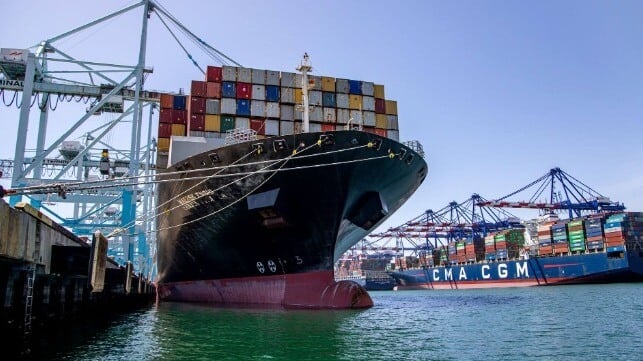
Just in time for the peak container shipping season on the China-U.S. transpacific route, the Trump administration has negotiated a deal with the government of China to relax unprecedented tariffs on bilateral trade. The U.S. will drop its net tariffs on Chinese goods from 145 percent down to 30 percent, well below the levels that many market participants predicted. China will drop its tariffs on U.S. goods from 125 percent down to 10 percent.
The temporary agreement is valid for at least the next 90 days while the two sides discuss permanent terms, giving U.S. importers a window to stock up on Chinese-made goods for the American holiday shopping season. Facing unprofitable tariff levels, many American importers had stopped shipping goods out of China to await more favorable developments, hitting Chinese consumer-goods manufacturers hard. The slowdown will now shift in reverse as retailers move to rebuild inventory. "Get ready for a shipping boom," said Flexport CEO Ryan Petersen in a statement early Monday.
Stocks soared on news of the agreement, with the Nasdaq jumping by four percent by midafternoon. The Dow and the S&P 500 both gained about three percent. All three indices have now regained all of the losses incurred after the White House's April 2 tariff announcement.
"We believe new highs for the market and tech stocks are now on the table in 2025," said Dan Ives of Wedbush Securities, speaking to the WSJ. "This morning is a huge win for the bulls."
Trade-dependent container shipping stocks took off, regaining much of the lost ground of recent weeks. Matson, the Jones Act carrier that operates a specialty service from East Asia to the U.S. West Coast, jumped 19 percent in midday trading (though it is still down 30 percent over six months). Maersk's OTC stock traded up 10 percent, Hapag-Lloyd was up more than two percent, NYK by nearly four percent, and Yang Ming by one percent.
“We expect bookings from China to the U.S. to increase, which should help us . . . into peak season," Hapag-Lloyed told Reuters in a statement.
maritime-executive