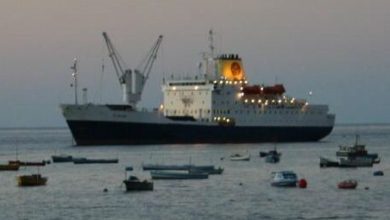
Interview: A Return to Wind Power with Tuomas Riski & Norsepower

Norsepower CEO and co-founder Tuomas Riski has put a new spin on some established technology, bringing wind power back to shipping in an undeniably eye-catching manner. Here Nor-Shipping’s latest ‘Ocean Action Hero’ explains the benefits of his firm’s unique technology, his plans for building global market presence, and the key role Norsepower’s sails can play in enabling a more sustainable shipping industry.
“But isn’t there a problem that some people think it looks, you know… a bit odd?” Tuomas Riski laughs at a question that you quickly get the feeling he’s dealt with before. On numerous occasions.
It relates to the 18, 24 and 30-meter-long cylindrical ‘sails’ that Norsepower, the firm he set up in 2012, want to roll out across suitable vessels in the world fleet. Their ingenious modern take on the Flettner rotor, which was invented back in 1925, produces auxiliary vessel propulsion from wind, drastically cutting fuel consumption and emissions.
And drastic is the right word, with long-term average reductions of anywhere between 5 and 20%. In that respect the technology generates more than just energy – it creates both competitive advantage and significant environmental benefits. It is, or should be, a game changer for relevant shipowners everywhere.
Or at least those that can get used to the idea of sticking one or two great big composite tubes on their sleek vessel’s deck.
Stand out innovation
“When diesel engines came to market people said the funnels were so ugly compared to beautiful sails, and maybe they were right,” smiles the affable Finn. “But then they saw the benefits, the advantages the engines gave the vessels, and accepted them. It was simply a process of familiarization, and I think it’ll be the same here as we return to a more efficient source of wind power.
“What’s more,” he continues, “for passenger ships such as cruise liners and ferries, in addition to the fuel and OPEX savings, it’s a floating advert for their environmental commitment. The very fact these stand out in the way they do communicates directly to stakeholders, including increasingly ‘green’ passengers, that here we have a shipowner dedicated to optimal efficiency and responsible operations.
“I firmly believe that in the future passengers will see these as the equivalent of winglets on an airplane’s wings – they’ll realize it reduces fuel consumption and actively choose ships with this type of green tech.
“So, let’s embrace the fact it stands out! Let’s be proud of that.” Beauty, it seems, is more than skin deep.
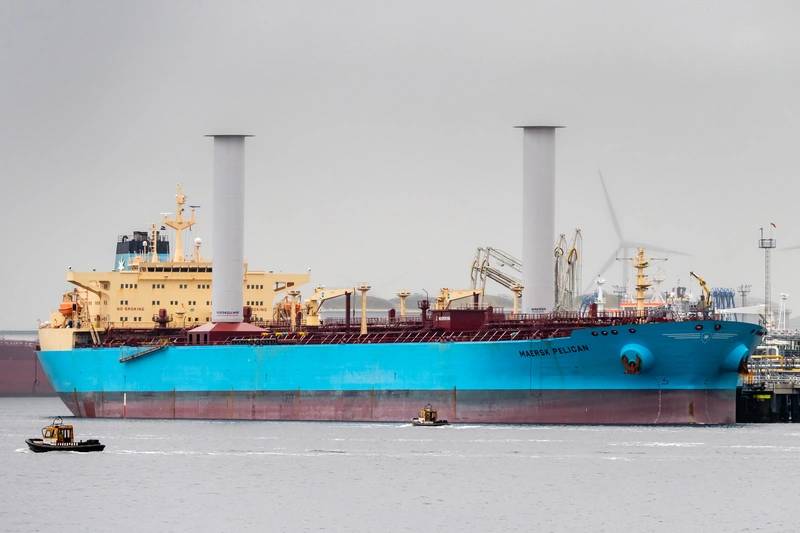 Photo: Norsepower Time for action
Riski is an impressive interviewee. A physics and economics graduate he has a history of entrepreneurship behind him that saw him play a key role in building one of Finland’s leading IT businesses (Innofactor Plc.), before exiting, quite simply, because he wanted to start a clean tech company and help reduce global carbon emissions.
He says he sees the need for the world economy to transition to cleaner power as an opportunity rather than a challenge, sowing the seeds for huge growth potential for the firms with the right mindsets, innovations and strategy. Norsepower seems to tick all three of those boxes, having refined the Flettner (which is basically a smooth cylinder with plates that is spinned along its axis), engaged key partners, raised over $20 million in development funding, and commenced a scale-up that should enable the team to reach EUR 100 million annual turnover by 2024.
“We have proof of concept now,” Riski states, “and with our composite manufacturing technology – and our plans to open a new production base in China later this year – allied to growing demand for clean tech there is huge potential ahead. Now is the time for action.”
Generating benefits
Despite Riski’s winning blend of ambition and optimism, he is candid about the challenges the business has faced, particularly with regard to winning over industry doubters.
The first sails were installed back in 2014 on Finnish shipowner Bore’s 9,700 dwt RoRo Estraden and, it seems, performed exactly as expected. However, it wasn’t until 2018 that the next projects were completed, with sails fitted to Viking Line’s cruise ferry Viking Grace and to Maersk Tankers’ 245-meter-long crude oil tanker Maersk Pelican.
maritime professional