EU Parliament Moves to Apply Cap-and-Trade to European Shipping
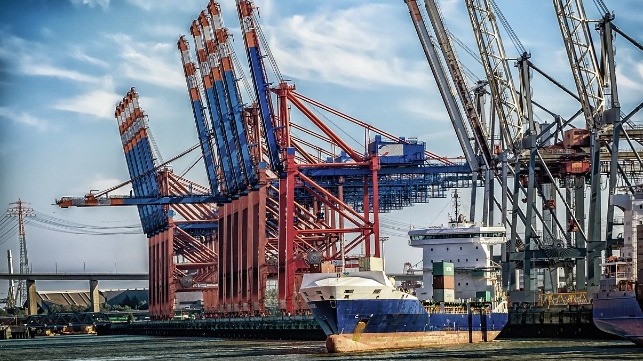
The European Parliament is charting a controversial course to include intra-EU shipping within the EU Emissions Trading Scheme (ETS), the CO2 cap-and-trade system that covers other European industries. The parliament voted Tuesday to create a legislative proposal with this objective, and a second vote is expected Wednesday.
“It is high time that the ‘polluter pays’ principle is applied to shipping,” said Green Party MEP Jutta Paulus, the leader of the regulatory effort, in a statement Tuesday.
If approved by both the EU Parliament and EU Council, the measure would call for an initial application of the EU ETS to intra-EU shipments, not to transoceanic import and export shipping. Shipowners would have to purchase carbon credits to cover the covered emissions. The price of credits has risen in recent years, and they are currently trading in the range of $22-25 per tonne of CO2 on the open market. The expected date for implementation of a final rule is in 2023 – roughly the same timeframe that the IMO will next be considering its own global CO2 regulatory plans.
The European Community Shipowers' Associations (ECSA) has pushed back against the European Parliament's measure, calling it an attempt to "pre-empt the conclusions of the European Commission’s impact assessment study" on shipping's greenhouse gas emissions. ECSA said that the legislation also undermines the climate negotiations at the IMO.
"The whole [of] European shipping is fully committed to decarbonization and stands behind the EU's bold ambition to become the world's first carbon-neutral continent. In our opinion, imposing any regulatory measures without measuring the impact on shipping is not prudent. Regional measures have been criticized for undermining global negotiations at UN IMO level and may slow down or even reverse the progress that has already been made," said ECSA secretary general Martin Dorsman in a statement. "We trust that the [EU] Council will put on hold any proposals until a thorough and comprehensive impact assessment is carried out."
Against the backdrop of an EU threat to incorporate shipping into the EU ETS, the IMO adopted a nonbinding "initial strategy" on GHG reduction in 2018, and it set an ambition for a 50 percent cut in greenhouse gas emissions by 2050. The plan calls for a fourth and fifth round of IMO climate studies by 2022, followed by another round of GHG reduction negotiations in 2023.
If it were developed, a binding IMO rule on carbon emissions would require a new IMO convention. Once adopted, the convention would need to be ratified by a sufficient number of member states representing about a third of the world's tonnage in order to enter into force. Ratification is a multi-year process, and IMO's major environmental conventions have generally taken longer. Ratification for MARPOL 1973 took nine years; the Ballast Water Management Convention took 12; and the Hong Kong Convention on ship recycling – which was adopted in 2009 – has not yet been ratified.
maritime-executive