Dredging: Managing the Impact of Channel Deepening and Widening on Surrounding Structures
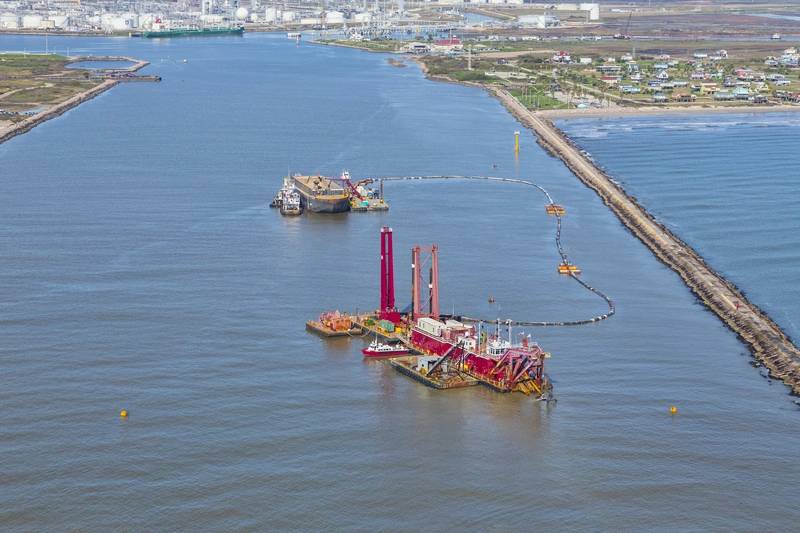
U.S. ports have worked toward increasing the depth and width of their channels to allow for larger ships with greater capacities. The equation is generally: bigger ships = more throughput = increased profitability. But what are the impacts around a channel after it’s widened? The ripple effects may go further than you think.
Managing the Impact of Channel Improvement Projects on Structures and Pipelines
With more water to impact them, structures around an expanded channel may need improvements, and pipelines under the channel may need relocation to make way for dredging. Streamlining the process to account for these changes takes a considerable amount of early coordination and collaboration amongst stakeholders.
Many disciplines of expertise are required to make these channel deepening projects happen — from engineers (coastal, geotechnical, structural, electrical, civil and more) to environmental scientists and permitting specialists who help comply with the federal, state and local regulatory laws to protect the environment.
Ripples Affecting Docks, Bridges and Bulkhead Structures
Many structures are situated on or around shipping channels such as dock facilities (including wharf and jetty platforms, mooring and breasting structures, approachways and catwalks) bridges, navigation towers, coastal floodwalls, piers and bulkheads. When channels are expanded, each of these structures is influenced by the ripple of more water in a deeper and wider channel. As the original built environment changes, owners of these structures must reassess their structural and geotechnical integrity.
Facility Capacity
If dock owners want to take advantage of the expanded channel and service larger, more efficient ships, they need to determine the serviceability of their facilities. These larger ships typically require additional mooring and berthing capacities, berthing depth and overall size (length and width) adjustments, and at times, modifications and/or upgrading of the existing mechanical equipment like loading arms, hoses, piping and gangways. For the facility to handle increased structural and throughput loads, owners must undertake studies like passing vessel analyses, maneuverability assessments, integrity analyses of existing structures, equipment operational envelope studies, mass balance studies and existing component condition assessments. These studies can be involved and require a methodical process. They often take considerable time to complete. Facility owners can save time and money when accounting for these studies early in the planning and execution stages of channel deepening and widening projects.
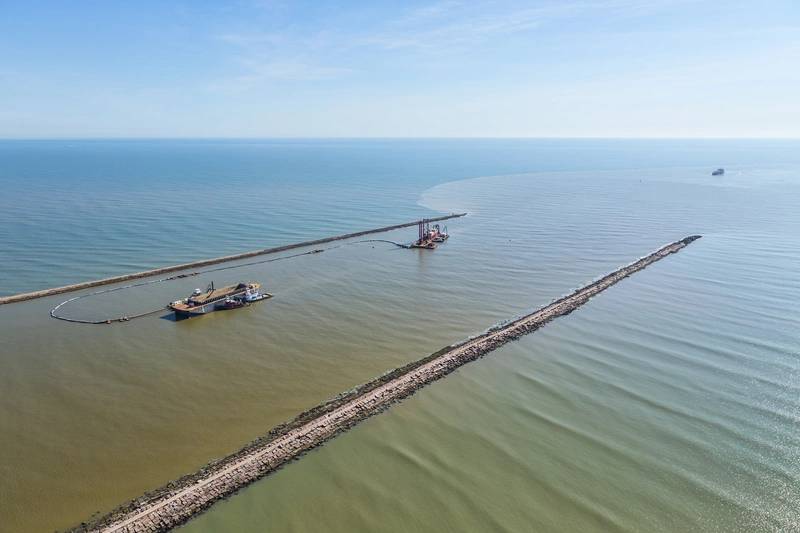 Photo: Scott Dobry Pictures
Pipeline Relocation Ripple
Countless pipelines and tunnels run underground in and around shipping channels. Pipelines that may be uncovered or disturbed during dredging must be moved, requiring pipeline operators to plan for impacts on their businesses. As with impacted terminal facilities and docks, engineering analysis of soils, environmental mitigation and new permits are required for each pipeline relocation. From an overall cost and project schedule perspective, there are significant benefits in pipeline operators and port authorities working together during data acquisition, and particularly in geotechnical and regulatory phases. Early engagement of channel improvement project stakeholders and consultants is helpful as pipeline operators anticipate forecasted pipeline outage times during relocation.
How Is All of This Funded?
A variety of sources — public, private and public-private partnerships — fund channel improvement projects.
Government Versus Private Funding
When more private funding is involved in an improvement project, it typically decreases the time needed to get the project designed and constructed because there are less procedures and requirements. If the federal government is involved, the minimum standard for deep draft navigation projects is divided into 75% federal and 25% non-federal funding. For most cases when federal funds are involved, the federal government pays for the ongoing maintenance of the ship channel after the deepening and widening improvements are completed. Channel maintenance — continued dredging to keep the channel in the desired location — over the years can far exceed the initial capital improvement costs, so partnership with the federal government can save considerable expense over the project’s life. Project stakeholders need to weigh the options carefully to find the best funding balance.
Who Pays for the Ripples?
Dock and structure improvements are typically the owner’s responsibility to maintain and upgrade as needed whether the owner is benefitting from the channel deepening and widening project or not. All navigation projects operate under their own guidelines and regulations. Therefore, there is no standard for funding pipeline relocations. Cost apportionment for publicly funded channels will be different from private channels. Cost sharing for channels developed by the federal government and supported by a local sponsor (likely the port) will change based on when the channel project was “authorized” by Congress. The current guidance indicates the local sponsor is responsible for half the pipeline relocation cost, and the pipeline owner is responsible for the remainder. Upgrades to pipelines are the pipeline owner’s responsibility. In rare cases, the local sponsor or the federal government will remove abandoned pipelines.
maritime professional