VLCC Volatility Brings Record USD 410K Fixture
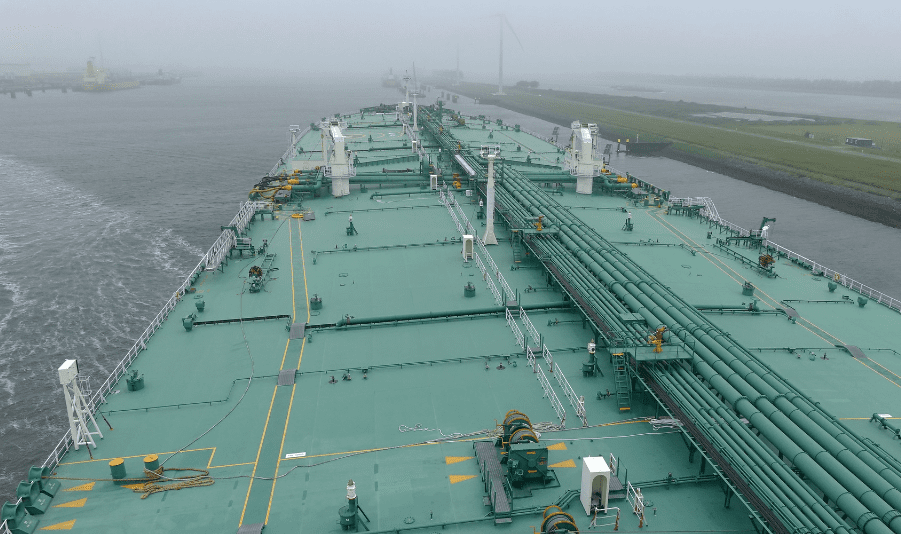
The volatility in the tanker market sector has seen earnings for the very large crude carriers (VLCCs) skyrocket, bringing unexpected joy to tanker owners.
The average earnings for a VLCC jumped 600% from 30,000 per day in the middle of February to USD 210K per day last week.
What is more, on Friday, March 13, Tankers International reported a fixture worth USD 411.89K per day. A 15-year old VLCC Princess Mary, owned by Greek Hellenic Tankers secured the charter from Reliance Industries from India.
The charter rounds off a major fixing binge from Saudi Arabia’s national shipping company Bahri, which spurred daily tanker rates and boosted demand for tankers.
The fixtures followed on the back of UAE’s announcement to raise crude output to 4.0 million b/d from 3.2 million b/d in February, with an objective to boost capacity to 5.0 million barrels. Russia joined the move with an increase in production by 200-300,000 b/d.
According to the latest tanker opinion from Poten and Partners, Bahri, owner of 41 VLCCs, has hired up to 25 tankers on subject, out of which 11 have been confirmed so far.
“The most recent period that Bahri was relatively active in the spot market was 2015-2016, but even then, spot fixture activity did not exceed 6 vessels per week,” Poten said.
“At the moment, it is likely that the number of vessels that Bahri needs for Saudi Arabia’s exports exceeds the tonnage that they have available, hence their decisive action in the spot market.”
According to Poten’s data, 10 of the 25 VLCCs are destined for the U.S. Gulf, while 4 are most likely headed for Europe.
Another 10 VLCC are fixed to discharge at Ain Sukhna, the entry point of the Sumed pipeline, which transports crude oil through Egypt from the Red Sea to the Mediterranean. This crude will most likely end up in Europe. None of the spot VLCCs have been fixed to Eastern destinations.
“This is a clear sign that the Saudi’s are targeting Western clients with additional volumes, in direct competition with Russia,” Poten added.
The average number of VLCC fixtures per week for 2020 year-to-date is about 50, which is similar to the weekly averages in recent years. However, estimates from shipbrokers show that this level of fixing cannot be maintained as demand for oil cannot keep up.
Goldman Sachs predicts the production increase could result in a record surplus of about 6.0 million b/d by April. According to a market commentary from Gibson, there is a real possibility of 4.9 million b/d of surplus oil production.
“If these production levels are maintained for the balance of the year, a staggering 3.7 million b/d surplus could build, although it seems inconceivable that such a scenario could be sustained,” Gibson said.
world maritime news