NAT: Decreasing Oil Prices Good News for Tankers
A massive oil price war has erupted between Saudi Arabia and OPEC countries after Russia refused to join the proposed production cuts announced last week.
Under the proposal, OPEC wanted its members to slash production by 1 million barrels per day, seeking an additional cut of 500,000 barrels per day from non-OPEC producing countries participating in the Declaration of Cooperation, such as Russia.
The move was aimed at curbing the impact of the COVID-19 outbreak on global economic and oil demand forecasts in 2020, particularly for the first and second quarters of the year.
Russia was not on board with the production cut as it fears the production decrease would solely aid North American shale producers.
Furthermore, over the weekend Saudi Aramco announced steep discounts to its official selling price for April, igniting a price war among major global producers. The WTI and Brent prices fell to mid USD 30s per barrel, down 25% and 24% respectively.
“It appears that OPEC’s kingpin producer Saudi Arabia seems unwilling to deepen production without Russia’s participation, and the two seem to be the only countries from the group with the capacity to increase output,” Poten and Partners said in a commentary.
“Being able to produce 5% more at a price that is 20% lower does not seem to be a great deal, but that seems to be the reality facing producers now.”
“The lack of a production deal carries risk. This would become apparent if global economic growth weakens and oil demand continues to contract more sharply than expected thanks to the double whammy of coronavirus containment measures and falling GDP,” Ann-Louise Hittle, vice president, Macro Oils, at Wood Mackenzie, said.
WoodMac expects global liquids demand to fall by 2.7 million b/d year-on-year in the first quarter of 2020, the first year-on-year decline on a quarterly basis since Q2 2009.
“A sustained bout of low oil prices will further reduce cash flow and investment into the US oil patch, causing further hits to Lower 48 production growth later this year. It takes at least six to nine months for reductions in spend to lead to lower oil production in the US Lower 48,” she added.
“In that time, their access to capital may be limited and their free cash flow badly hit, so driving bankruptcies and raising the prospect of fire sales.
“The only silver lining in a very dark cloud is for refining – the sector will be hit hard by weak demand, but it is at least saved from tightening crude differentials associated with a major cut in OPEC supplies.”
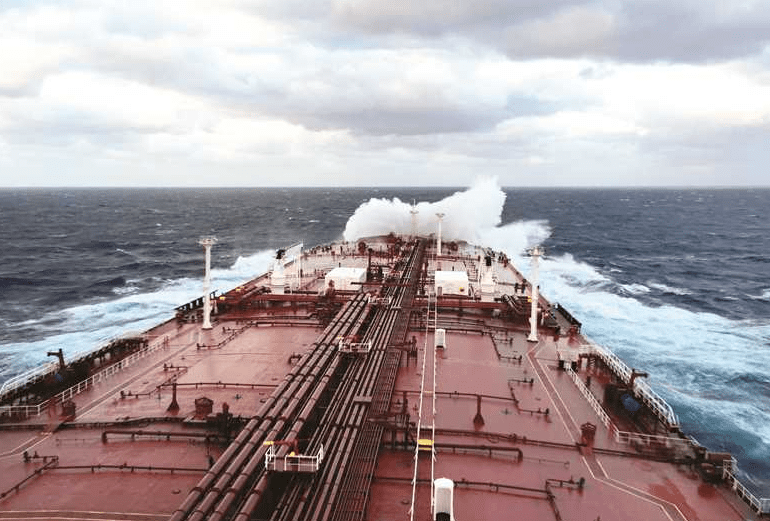
Commenting on the impact of the ongoing situation on the tanker market, Suezmax owner and operator Nordic American Tankers (NAT) said that lower oil prices were good news.
“It is an indisputable fact that a low/decreasing oil price is good for the tanker market and our ships. More transportation work will be required,” the company said.
world maritime news