Beirut Marks Year Since Port Blast with Demands for Justice
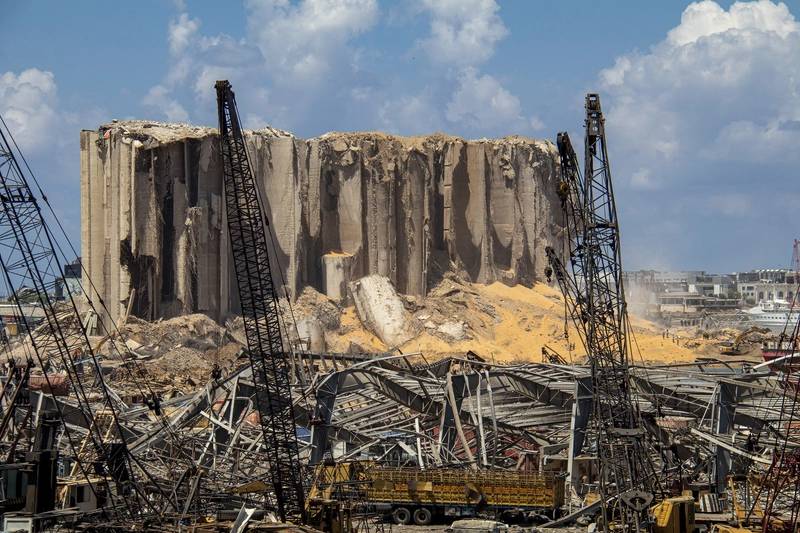
Thousands of Lebanese gathered near the port of Beirut on Wednesday to mark the first anniversary of a catastrophic explosion that devastated the city, demanding justice for the victims.
One year since the disaster, caused by a huge quantity of ammonium nitrate stored unsafely at the port for years, no senior official has been held to account, infuriating many Lebanese as their country also endures financial collapse.
One of the biggest non-nuclear explosions ever recorded, the explosion wounded thousands and was felt in Cyprus, more than 240 km (150 miles) away.
An investigation is stalling with requests denied for immunity to be lifted from senior politicians and former officials. All those sought for questioning by the Lebanese investigators have denied any wrongdoing.
“We will not forget and we will not forgive them ever. And if they can’t bring them to account, we will by our own hands,” said Hiyam al-Bikai, dressed in black and clutching a picture of her son, Ahmad, who was killed when masonry fell on his car.
A huge banner on a building overlooking the port said: “Hostages of a Murderous State.”
French President Emmanuel Macron, who has led Western pressure for reform in Lebanon, said its leaders owed the people the truth and heaped new criticism on the governing elite for failing to deal with the economic crisis.
The damage is still visible across much of Beirut. The port resembles a bomb site, its huge wrecked grain silo unrepaired.
Thousands of people, waving Lebanese flags and holding pictures of the dead, had marched towards the port, where prayers are expected to be held just after 6 p.m. (1500 GMT), coinciding with the time of the blast.
“We want our rights – the rights of the martyrs and victims. Their immunities are not more dear than the blood of the martyrs and victims,” said Hanan Hoteit, whose relative, Tharwat, was killed at the port.
A Human Rights Watch report released this week concluded there was strong evidence to suggest some Lebanese officials knew about and tacitly accepted the lethal risks posed by ammonium nitrate.
Reuters reported last August that Prime Minister Hassan Diab and President Michel Aoun were both warned in July last year that the chemicals posed a security risk and could destroy the capital if they exploded.
Aoun has said he is ready to testify if needed, and that he supports an impartial investigation.
Diab, who quit after the blast, has said his conscience is clear.
maritime professional