Trump Changed How the U.S. Trades, But Not Necessarily as Intended – Graphs

WASHINGTON, Nov 2 (Reuters) – U.S. President Donald Trump’s “America First” trade policy torched a 70-year consensus on trade liberalization, drew a harder line against China’s state-driven economic model and erected new tariffs on imported steel and aluminum, alienating allies.
Trump is touting his efforts to protect American workers and a Phase 1 trade deal with China that promises to boost U.S. exports as closing arguments in Tuesday’s presidential election.
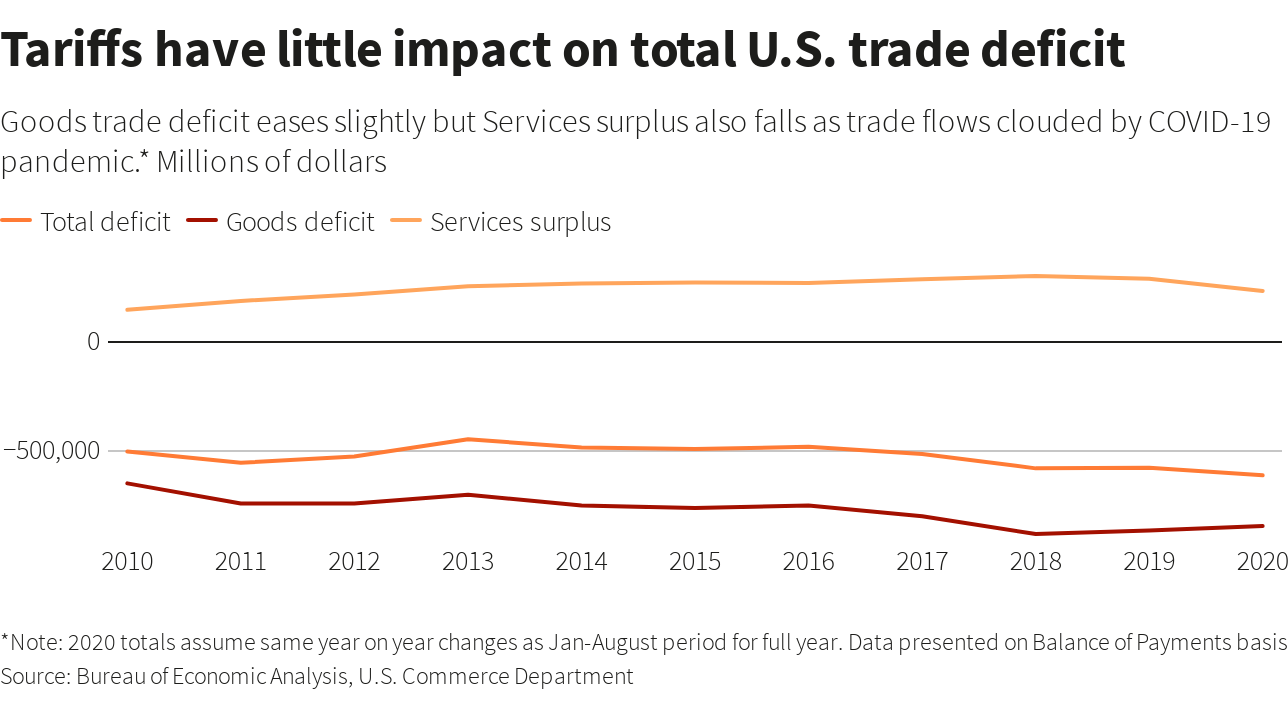
Economic data so far shows mixed results from that effort, with some sectors gaining at the expense of others, but with little change in the overall U.S. trade deficit for goods and services.
Since 2018, Trump has imposed punitive tariffs on imported washing machines, solar panels, steel, aluminum and goods from China and Europe, with Chinese imports accounting for most of the nearly $80 billion collected so far.
The tariff war against China started with a 2017 investigation into longstanding U.S. complaints about Chinese state-driven economic policies, including intellectual property theft, forced technology transfers and rampant subsidies to state-owned firms that were pushing the U.S. trade deficit higher.
Business interests largely supported the goals of the “Section 301” probe, but warned that tariffs would hurt U.S. competitiveness by raising input costs.
Retaliations and escalations eventually imposed tariffs on $370 billion in Chinese goods before the Phase 1 deal was signed in January, committing Beijing to boost purchases of U.S. farm and manufactured goods, energy and services by $200 billion over two years.
Thus far, the tariffs have reduced imports of goods from China but have not significantly altered the global U.S. goods and services trade deficit.
Companies responded by diversifying supply chains, shifting some production out of China – but mostly to other low-wage countries, such as Vietnam and Mexico, not to the United States.

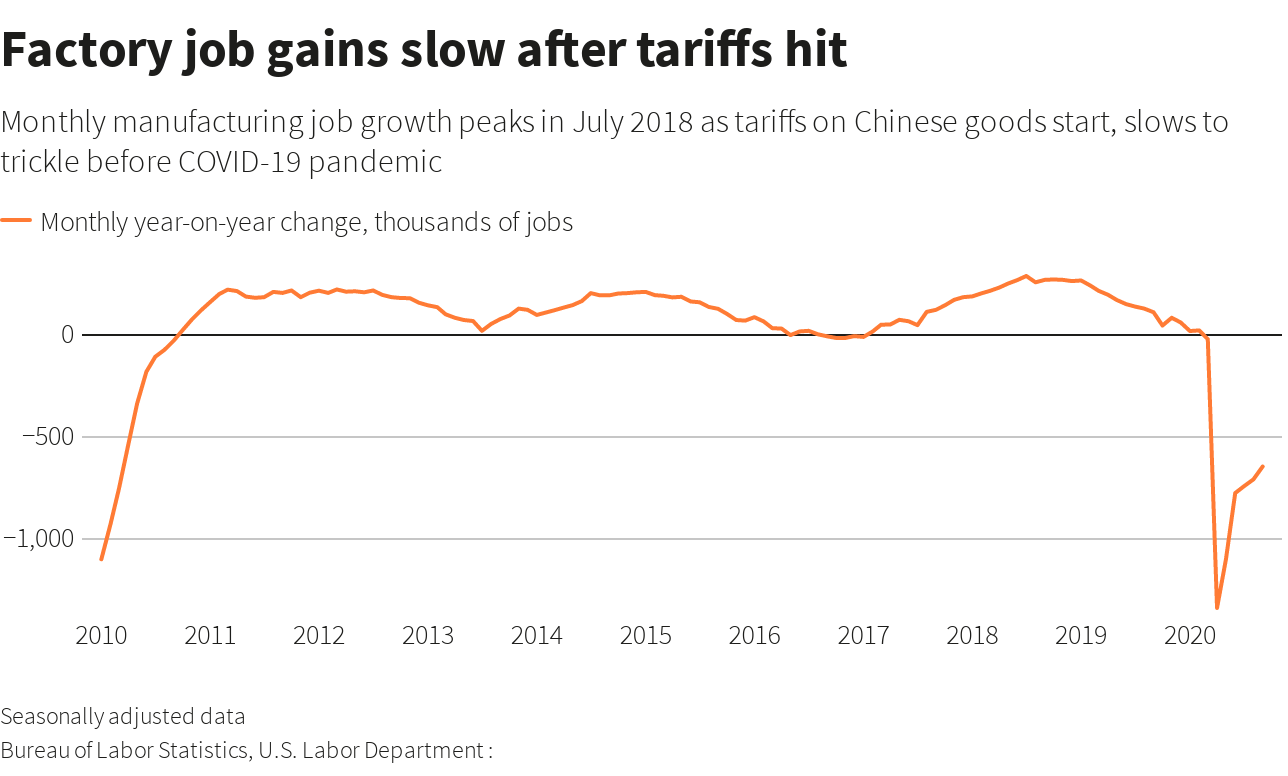
One of Trump’s goals was to increase American manufacturing jobs. The numbers have grown since he took office in 2017, partly due to a massive corporate tax cut. But manufacturing employment growth slowed after he launched the tariffs in 2018, becoming a trickle before the coronavirus pandemic hit in early 2020.
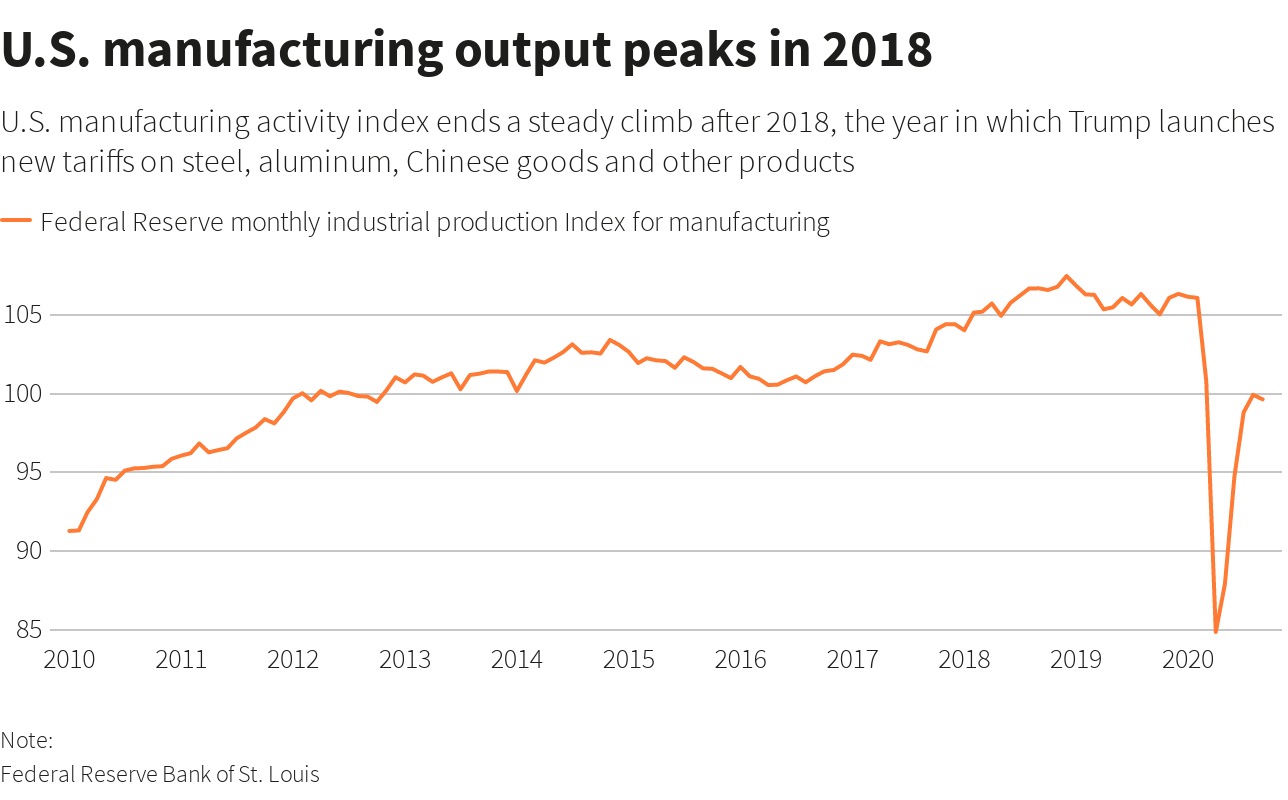
The Federal Reserve’s measure of U.S. manufacturing output also peaked in 2018.
Trump angered U.S. allies in Europe, Asia and the Americas by imposing 25% tariffs on steel and 10% on aluminum in 2018 on national security grounds.
gCaptain