Wood Mackenzie Report Outlines Coal v. LNG Emissions Debate
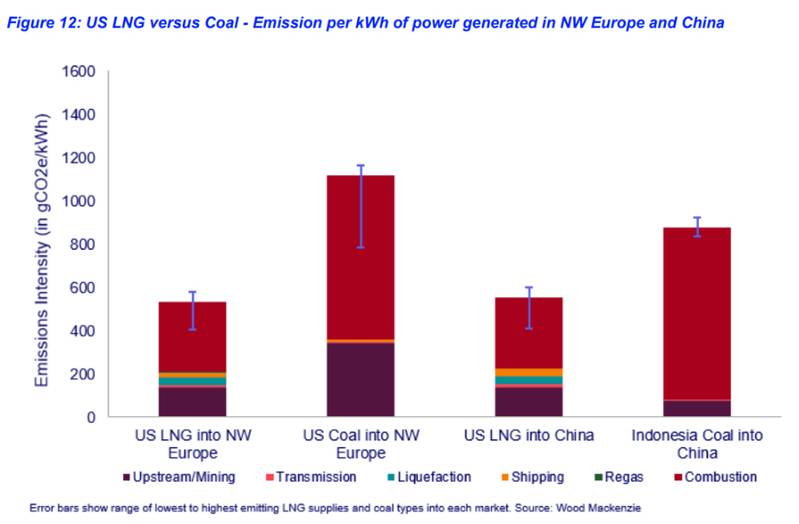
Wood Mackenzie’s new report reveals the lifecycle emissions of U.S. LNG are typically around 48% of the coal equivalent. Credit: Wood Mackenzie
Wood Mackenzie has published a new report, titled “Shining a light on the ‘coal versus LNG emissions’ debate.”
Wood Mackenzie’s analysis reveals the lifecycle emissions of U.S. LNG are typically around 48% of the coal equivalent. This difference is not just related to the significantly higher emissions related to the combustion of coal versus gas but also on the extremely high methane losses associated with underground mined bituminous coals from Appalachia, which is a key source for imported thermal coals in NW Europe.
The report shares that the average lifecycle emissions for U.S. LNG in China is around 63% of the level for coal. The range of coal emissions is considerably less than that seen in the U.S. This is driven by much lower methane losses associated with surface mined coals from Indonesia. That said, even the lowest emitting Indonesian coal is still 23% greater than the highest emitting U.S. LNG due to coal’s significant combustion emissions.
Additional points made by Daniel Toleman, Research Director of Global LNG, include:
- Gas for U.S. LNG projects is not primarily sourced from the high methane intensity Permian basin—currently gas from the Permian makes up only 10% of supply with more than two thirds coming from the lower emissions basins of the Haynesville and Northeast.
- A significant proportion of gas from the Haynesville and Northeast is known to be certified as having methane intensities of less than 0.2% and thus our estimates for U.S. LNG in this analysis are probably higher than the current reality.
- U.S. liquefaction projects typically have more modern and efficient turbine technologies and thus on average have over 20% lower emissions intensities than the global average.
- Higher emitting steam turbine LNG vessels carry only a very small percentage of U.S. LNG—most LNG is shipped from the U.S. on modern, higher efficiency vessels with significantly lower emissions.
- Coal from underground mines has methane emissions intensities that are significantly higher than any U.S. LNG project.
maritime professional