BIMCO: Coronavirus Comes at the Worst Time for Shipping
The outbreak of the coronavirus, originating from Wuhan, China, comes at one of the worst time for the shipping industry, which is currently struggling with the additional fuel costs from IMO 2020 and the switch to low-sulphur fuels, according to BIMCO.
“Demand is destroyed in China due to the coronavirus. Demand stemming from consumer spending, power generation and industrial production is lost every day that large parts of China remain quarantined. That demand will not necessarily rebound once the virus is contained,” Peter Sand, BIMCO Chief Shipping Analyst, said.
Even though there is a veil of uncertainty hampering the ability to predict the outlook for the shipping industry, BIMCO’s Chief Shipping Analyst analysed three scenarios:
• In BIMCO’s Scenario 1, it is assumed that the virus in large parts will be contained by the end of February and that the Chinese workers will return to work during early March, prompting a subsequent pick-up in manufacturing, industrial production and refinery throughput, as well as shipping demand.
• In Scenario 2, it is assumed that in the medium-term large-scale quarantines will continue until mid-March, but hereafter economic activity picks up and reaches a state of normalisation by April-May.
• Scenario 3 is the worst-case scenario, where the spread continues until an indeterminate point in time. However, with the massive uncertainties related to this scenario, it remains outside the scope of this analysis to make long-term projections. As such, BIMCO’s analysis primarily focuses on the short to medium-term implications.
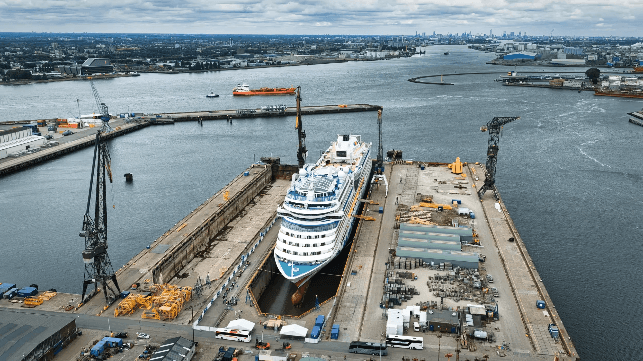
Shipyards in China, many of which would otherwise be busy with IMO 2020 scrubber retrofitting, have remained closed and declared force majeure in many cases. An estimated 150 vessels are currently under retrofit at Chinese yards, according to Clarksons.
“The lockdown of newbuilding yards may prove to be the only silver lining to the outbreak as inflow of more ships are temporarily stopped,” BIMCO said.
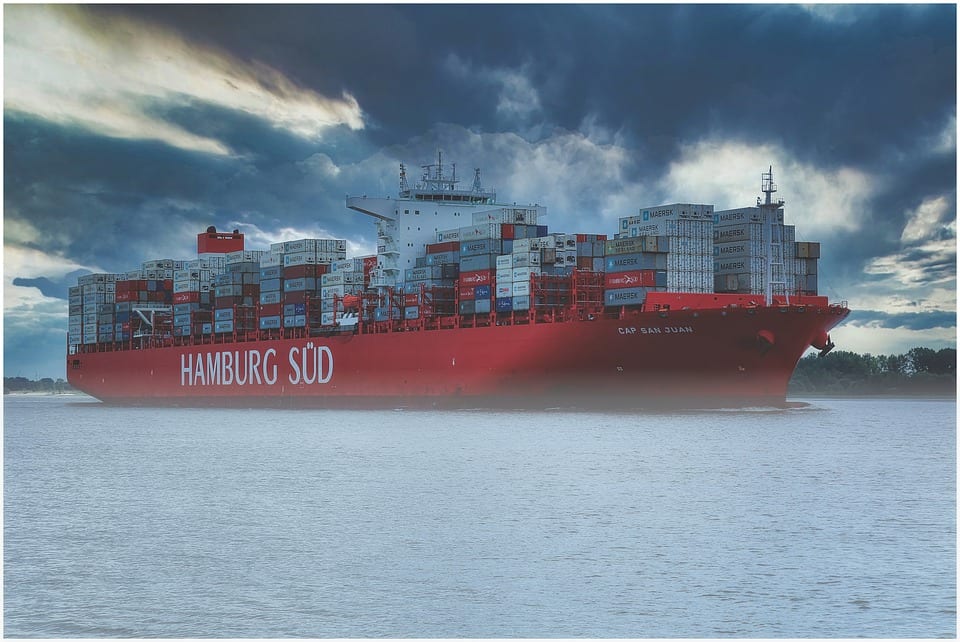
Container shipping is inextricably tied to China with the main trade lanes, China-Europe and China-North America, linking China’s manufacturing capabilities with the rest of the world.
First, many of the producers of containerised goods have halted production or are producing at lower levels.
Second, the Chinese hinterland transportation of containers, in the shape of trucking, is in massive labour shortages.
Faced with the lower container volumes, container carriers have started large-scale blanking of sailings. On the Asia-North Europe trade lane, 40 sailings have been blanked in the eight-week period after Chinese New Year, compared with the 15 sailings blanked last year, according to Alphaliner.
The blanked sailings have partially safeguarded the freight rates from the coronavirus with the composite SCFI index, dropping a modest 93 index points from 981.19 on January 23 to 887.72 index points on February 14 2020.
However, BIMCO believes the blanked sailings will only fend off the downward pressure for so long.
world maritime news