100 Years of the Jones Act – Here is to Another 100 Years!

As one of the three legs on which the modern American deep-draft merchant marine resides upon – the others being the requirement for government cargo preference and the Department of Defense funded Maritime Security Program (MSP) – a loss of the Jones Act would mean the reflagging and removal of the crews from 99 of the 185 ships remaining in the fleet.
The reasons advocated for repeal are many, but they can be boiled to one salient issue: COSTS. Opponents to the Jones Act argue that American-built, American-crewed, American-owned, and American-flagged is more expensive than their foreign counterparts. To which, most normal people would respond, is that not true of nearly all other industries? And you would be largely correct. Since the beginning of the twentieth century, American ships have cost more to build and operate than their foreign counterparts. Even at the height of American industrialization and steel manufacturing, the rising standard of wage in the United States, and labor reforms made costs higher. Today, while crews on foreign flagged ships are pushing nearly 12 months on board, American crews have the backing of the US to ensure that they are largely maintaining their rotations.
If one looks at the British merchant marine, which was the largest in the world at the dawn of the twentieth century, they utilized crews from their empire to lower costs and they decreased, but did not eliminate, subsidies for all their ships. They only did this after they were the major force upon the seas. Let’s look at one of the arguments against the Jones Act.
In November 2019, Rust Buckets: How the Jones Act Undermines U.S. Shipbuilding and National Security – the author gave away the ending with the title – was published by the CATO Institute. The paper kicks it off with a study by the OECD on what the repeal would mean for the increased US economic output; they place it at $135 million. This is what opponents do, they focus on the economics and do not discuss the national security implications.
The focus is exclusively on Section 27 of the act and state that this is the Jones Act; and that is incorrect. The entire Merchant Marine Act of 1920 was created as a comprehensive national sealift strategy. Over time, elements of it have been undermined and co-opted. The act still provides protection for American mariners – both offshore and coastal – and that is also part of the Jones Act. The genesis of the act in 1920 was to deal with the large war-built fleet of the US Shipping Board and specifically address the shortages the nation faced when it entered World War One. Specifically, it wanted to prevent an occurrence where the US would be dependent upon foreign shipping in the future – this is exactly what the opponents of the Jones Act propose by the way. But have no worries, many of them have assured me that there will never be another war in the future – “Peace in our Time?”
The paper goes on to say, “Claims that the Jones Act is a national security asset have generally gone unchallenged.” Really? There have been groups and individuals fighting the Jones Act since I started sailing in the late 1980s. He argues that the law’s restrictions make it difficult to “foster a merchant marine and shipbuilding and repair capability that can be harnessed by the United States in time of war.” There is no denying that shipbuilding capacity and the number of ships being built in the US has declined. But why?
Well first, this is an international phenomenon. Although we are at an all-time high in number of ships and tonnage, 94% of all ships are built in China, Republic of Korea, Japan, and the Philippines. The name in shipping right now is consolidation, and in those countries, yards are merging into larger ones that are “Too Big to Fail.” This means, with COVID-19 hitting, those nations are dumping money into them to prevent them from going under and undercutting each other to get more shares of the industry. If the US was not a global power, it would not matter too much where its ships are built or crewed, but with military stationed in over 150 countries world-wide and a presence in all the oceans, is it wise for the US to surrender its commercial fleet to its economic rivals.
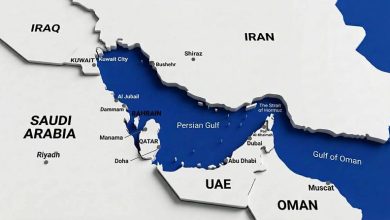
The example that is used is the scenario of the Persian Gulf War. The statistic that, “of the 281 Ready Reserve Force (RRF) and commercial ships chartered by the Military Sealift Command during the conflict, a mere eight were Jones Act-eligible.” Well, that is wrong! He identifies the ships but fails to mention all the other ships that meet this standard. Note, he cited Jones Act-eligible. Well, eight out of the thirteen Maritime Prepositioning Ships meet that criteria; all the ships chartered from Lykes Lines also met those requirements; but that does not fit the narrative, so it is omitted. This is a long running description that should have been debunked by the Department of Defense, Military Sealift Command, the Maritime Administration or the US Transportation Command, but it continues.
One of the reasons for this is the Defense Department invested in converting and constructing new ships for its surge sealift fleet. As they focused on this, they allowed the construction and differential subsidies that kept many ships of the international trading fleet – but were built in US yards and could engage in coastal trade – to lapse as they assumed their own surge fleet could handle future sealift operations. However, they did not factor in the sustainment, which relied on the commercial merchant marine, the shuttle ships for the US Navy replenishment vessels, or the galvanizing of opposition to the Jones Act.
The report also highlights the limited ship availability and notes the use of Ponce in the sealift effort. To paraphrase the report, since only one ship was needed in the operation from the Jones Act fleet, why have the Jones Act. A recent Center for Strategic Budgetary Assessments report highlighted the critical shortage in container capacity, roll-on/roll-off space, and most importantly fuel. Operation Desert Shield/Storm was a limited war in the perspective of the United States. It was endorsed by the United Nations and therefore it had large coalition support, meaning that the US could tap into shipping of other nations. This was not the case in Vietnam for the US from 1965-73 or the British in the Falklands in 1982. In both those cases, the nations utilized their domestic fleets to support their war effort. For America, that was until it could break out ships from the reserve fleet and develop new methods of cargo handling.
Not to leave the issue completely with no hope, the author proposed three solutions. First, the piece advocated for a civilian Merchant Marine Reserve; a concept that I endorsed in an earlier piece in gCaptain. This would organize the licensed merchant mariners, but their proposal fails to identify where these mariners will train or get experience and upgrade their licenses if the Jones Act fleet is foreign flagged? Second, he is fine with subsidizing the training of mariners, but not ships, shipyards, or operators. Finally, he advocates, well let me quote him directly, “policymakers should consider allowing foreign mariners to crew chartered auxiliary commercial sealift ships.”
It is that last idea that brings us back to the why the Jones Act was passed a century ago. In April 1917, when the US declared war against Germany it had suffered economic hardship. The divergence of the British and German merchant fleets from American trade crippled the economy and led to recession and panic. The Shipping Act of 1916 aimed to promote American shipbuilding and the maritime sector. As American ships shifted from the cabotage trade (this was pre-Jones Act) they went into international shipping to fill the void left went foreign ships deserted the trade. It was those ships that Germany attacked in early 1917 that led to American entry after ten ships were sunk and 64 mariners killed.
As a show of force, the US agreed to hastily scramble together a land force and ship them to France. A total of 14 ships were chartered or commandeered from the American merchant marine – one in international trade, two in the Caribbean, and eleven were operating along the US coast. The ships delivered the Army’s First Infantry Division to France, and one of its officers exclaimed in Paris, “Lafayette We Are Here!” The Navy commander of the convoy, Rear Admiral Albert Gleaves, had some issues with merchant ships on the voyage across.
The merchant officers of the transports were, on the whole, a highly efficient and capable body of men. Of the crews, little good can be said. These men are mostly the sweepings of the docks…men of all nationalities were shipped…in one case a member of the crew of the Momus of German extraction, openly threatened the safety of the ship. The crews of these transports at all times formed a serious menace to the safety of the convoy.
While Gleaves statement may be part hyperbole, it does raise concern to a policy that would vest the national security of American sealift in the hands of foreign seamen. At the end of the war, while America shipped most of the 6 million tons of cargo, it could only muster 45% of the transport space needed to ship the two-million-person expeditionary force to France. After the war, using their leverage, the British refused to release their fleet to return the Americans home. The Canadian military learned this lesson in 2000 when they had to retake a cargo ship that refused to dock and offload a large portion of the Canadian Army’s equipment; the subject of a great podcast by CIMSEC.
In World War Two, Jones Act ships provided the underway replenishment for the fleet carriers during the critical year of 1942. At the battle of Midway, the former SS Seatrain New York, converted into USS Kittyhawk, delivered Marines and their aircraft to the island just before the Japanese attack on June 4, 1942. Vessels drawn from the merchant fleet, including many built under the Jones Act, made up the invasion fleets at Guadalcanal and North Africa later that year. It was American merchant marine that provided the link between the Arsenal of Democracy to the battlefront, across contested seas.
Is there a significant issue with the American merchant marine today…YES! But the problem does not rely with the Jones Act, but what has come before it. How has the American merchant marine gone from being not only the largest in the world, but from carrying nearly 2/3 the world’s cargo at the end of the Second World War to only a fraction of a percent of its exports and imports.
gCaptain