Ever Given Fiasco Illustrates Importance of the Shipping Container

Take a look around you.
Perhaps you’re snacking on a banana, sipping some coffee or sitting in front of your computer and taking a break from work to read this article. Most likely, those goods—as well as your smartphone, refrigerator and virtually every other object in your home—were once loaded onto a large container in another country and traveled thousands of miles via ships crossing the ocean before ultimately arriving at your doorstep.
Today, an estimated 90% of the world’s goods are transported by sea, with 60% of that—including virtually all your imported fruits, gadgets and appliances—packed in large steel containers. The rest is mainly commodities like oil or grains that are poured directly into the hull. In total, about US$14 trillion of the world’s goods spend some time inside a big metal box.
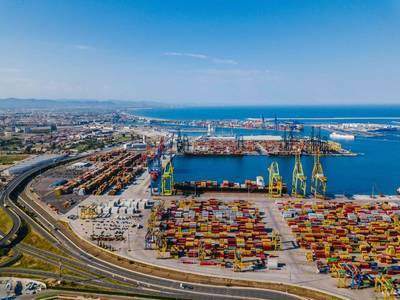
In short, without the standardized container—like the thousands that helped to keep the Ever Given stuck in the mud along the Suez Canal, snarling traffic for almost a week—the global supply chain that society depends upon would not exist. About 30% of global container shipping volumes transit through the Suez Canal.
The Ever Given incident reveals several kinks in the modern supply chain. But, as an expert on the topic, I think it also highlights the importance of the simple yet essential cargo containers that, from a distance, resemble lego blocks floating on the sea.
Trade before the container
Since the dawn of commerce, people have been using boxes, sacks, barrels and containers of varying sizes to transport goods over long distances. Phoenicians in 1600 B.C. Egypt ferried wood, fabrics and glass to Arabia in sacks via camel-driven caravans. And hundreds of years later, the Greeks used ancient storage containers known as amphorae to transport wine, olive oil and grain on triremes that plied the Mediterranean and neighboring seas to other ports in the region.
Even as trade grew more advanced, the process of loading and unloading as goods were transferred from one method of transportation to another remained very labor-intensive, time-consuming and costly, in part because containers came in all shapes and sizes. Containers from a ship being transferred onto a smaller rail car, for example, often had to be opened up and repacked into a boxcar.
Different-sized packages also meant space on a ship could not be effectively utilized and also created weight and balance challenges for a vessel. And goods were more likely to experience damage from handling or theft due to exposure.
© VanderWolf Images / Adobe Stock
A trade revolution
The U.S. military began exploring the use of standardized small containers to more efficiently transport guns, bombs and other materiel to the front lines during World War II.
But it was not until the 1950s that American entrepreneur Malcolm McLean realized that by standardizing the size of the containers being used in global trade, loading and unloading of ships and trains could be at least partially mechanized, thereby making the transfer from one mode of transportation to another seamless. This way products could remain in their containers from the point of manufacture to delivery, resulting in reduced costs in terms of labor and potential damage.
In 1956, McLean created the standard cargo container, which we basically still use today. He originally built it at a length of 33 feet—soon increased to 35—and eight feet wide and tall.
This dramatically reduced the cost of loading and unloading a ship. In 1956, hand-loading a ship cost $5.86 per ton; the standardized container cut that cost to just 16 cents a ton. It also made it much easier to protect cargo from the elements or pirates, since the container is made of durable steel and remains locked during transport.
The U.S. made great use of this innovation during the Vietnam War to ship supplies to soldiers, who sometimes even used the containers as shelters.
maritime professional